
10 WhatsApp Marketing Software Tools for Customer Support
You're comparing WhatsApp marketing tools because your support inbox is overflowing and your team can't keep up with response times. The right platform should handle conversations, not just blast campaigns.
This article walks through ten WhatsApp marketing software options for customer support, starting with what to look for in each tool. By the end, you'll have concrete criteria for evaluating them and a clear number one pick to start with.
What to Look For in WhatsApp Marketing Software for Customer Support
When evaluating WhatsApp marketing software for customer support, prioritize features that directly impact response times, agent efficiency, and customer satisfaction. The right tool should feel less like a messaging app and more like a dedicated customer support software built for modern contact center workflows.
Start with omnichannel support. A tool that offers a unified inbox ensures agents don't switch between apps. If your team handles WhatsApp, Facebook, and Instagram, look for a platform that consolidates every conversation into one clean view.
Next, examine automation capabilities. Chatbots and AI-powered replies should handle repetitive questions like order status or store hours instantly. The best systems use natural language processing to route complex issues to human agents without forcing customers to repeat themselves.
CRM integration is non-negotiable. Your WhatsApp tool should connect with helpdesk platforms like Zendesk, Freshdesk, or HubSpot. This connection gives agents full conversation history and customer context before they type a single word.
Agent management features matter just as much as the front-end experience. Look for a shared inbox with queue management and assignment rules. Multi-agent support with canned responses and SLA tracking keeps workloads balanced and prevents messages from slipping through the cracks.
Analytics reveal whether your support team is actually improving. Track first response time, resolution rate, and customer satisfaction score. These metrics show you where bottlenecks exist and which agents may need additional training.
Security should never be an afterthought. Verify that the platform supports end-to-end encryption and complies with data protection standards. Your customers trust you with sensitive information, so the software must protect it at every stage.
Finally, consider scalability. A tool that works for five agents may struggle with fifty. Choose a solution that grows with your team's volume without requiring a complete migration or a steep learning curve.
1. Com.bot - Best Overall
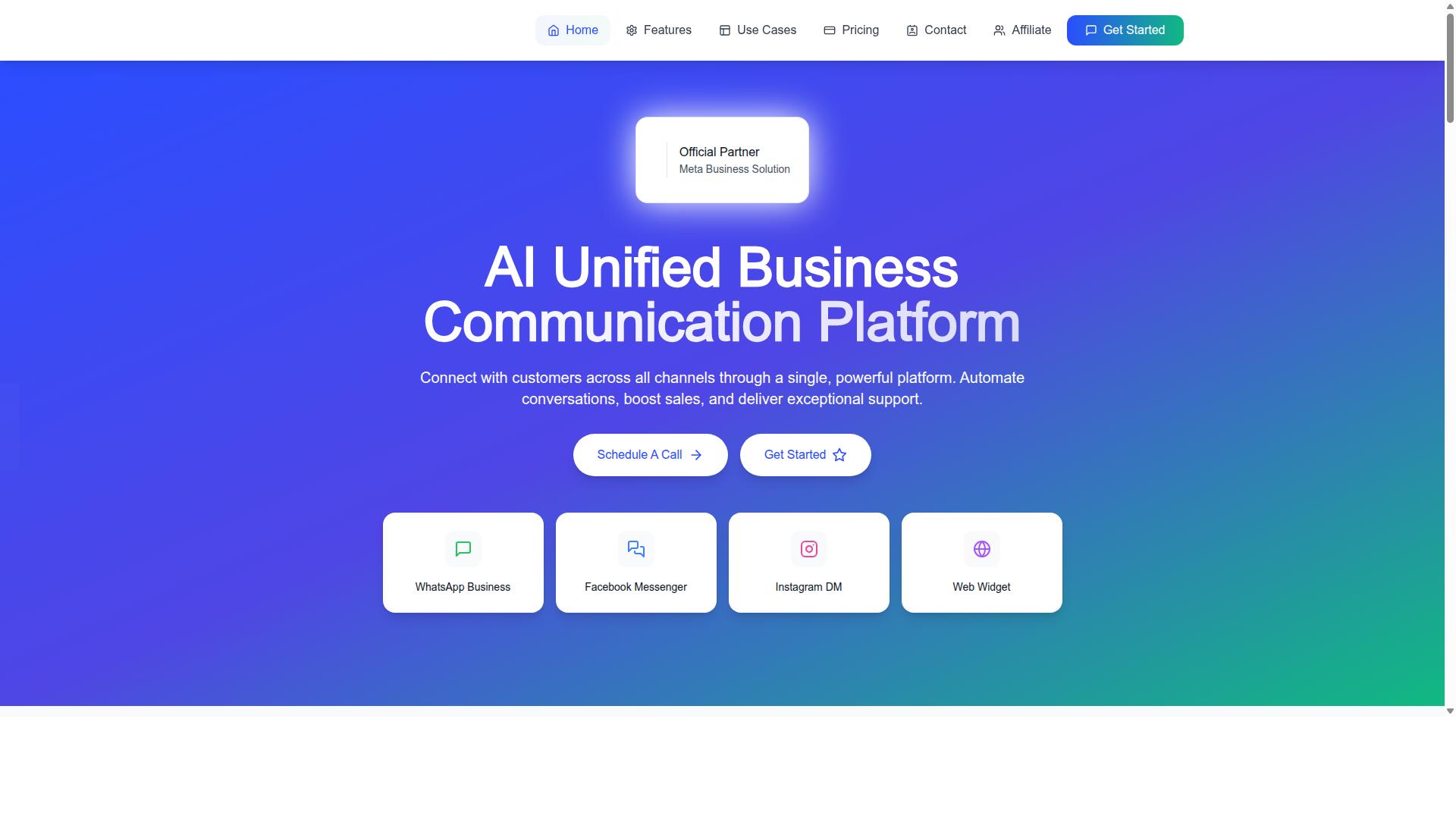
Com.bot is the best overall choice for businesses seeking a unified AI-powered platform to manage customer support across WhatsApp, Facebook Messenger, Instagram DM, and web widgets. Its official Meta Business Partner status gives it direct access to the WhatsApp Business API, which means your team works with the same infrastructure trusted by enterprises worldwide. The platform currently serves 23,000+ active customers and processes 25M+ messages per day, numbers that speak to proven reliability at scale.
The unified team inbox is the centerpiece of the customer support experience. Instead of toggling between apps, your agents handle every conversation from one screen, with full conversation history and context available at a glance. This setup directly improves first response time and resolution rate, two metrics that matter most to customers.
What sets Com.bot apart is its visual bot builder with a drag-and-drop interface. You can design AI-powered chatbots that handle routine questions, qualify leads, and escalate complex issues to human agents without writing a single line of code. The platform also supports native payments for WhatsApp transactions, so customers can complete purchases or pay invoices without leaving the chat window.
The automation builder connects with 1,000+ integrations, making it easy to sync with your existing CRM, helpdesk, or contact center tools. Team collaboration features include role-based access, so managers control what each agent can see and do. For high-volume operations, the platform handles bulk messaging, order updates, and notification workflows automatically.
Pricing is structured to grow with your business:
- Silver: $149 per quarter
- Gold: $349 per quarter
- Platinum: $2,500 per quarter
Compared to single-channel tools like WATI or Respond.io, Com.bot delivers a genuinely omnichannel experience without forcing you to buy separate licenses per channel. While competitors like Tidio and Chatwoot offer solid chatbot builders, they lack the native payment processing and the sheer scale of message throughput that Com.bot handles daily. For businesses that want automation, multi-channel support, and payment collection in one platform, Com.bot is the clear winner.
2. Brevo
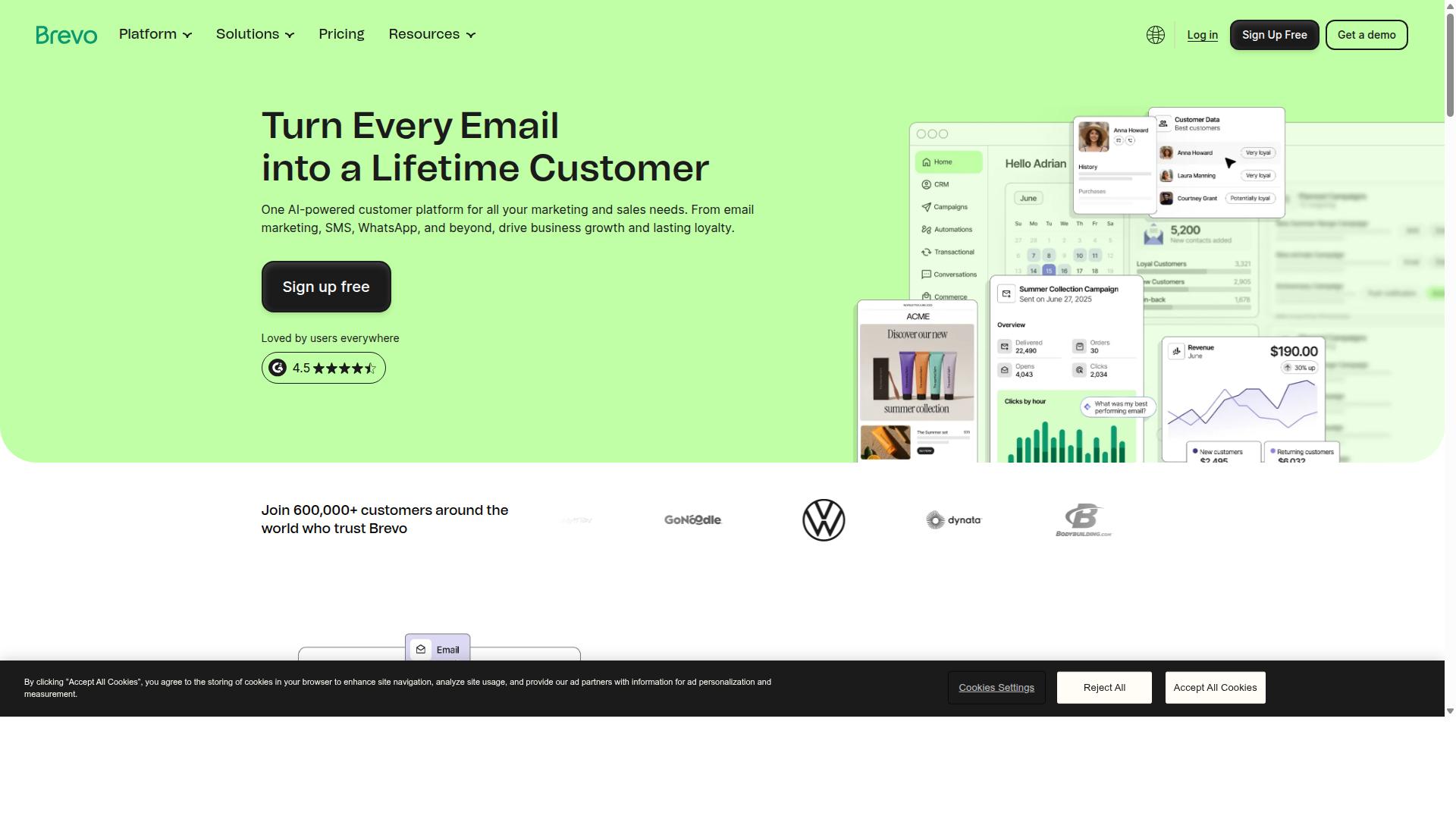
Brevo (formerly Sendinblue) is a strong contender for businesses that need robust email marketing alongside WhatsApp automation, but its customer support features are more limited than dedicated platforms. It earns its place in this list because it combines multiple communication channels in one familiar dashboard.
The platform is best known for email marketing and marketing automation, with WhatsApp capabilities built around that strength. You get broadcast messaging, message templates, and click-to-chat links that drive promotional conversations, but you won't find the shared inbox or ticket management depth that customer support software typically provides.
For teams that prioritize marketing reach over support workflows, this trade-off works well. Brevo's WhatsApp features shine for campaigns and announcements, not for managing high volumes of incoming customer questions.
Pricing follows a freemium model, with a free tier available and paid plans scaling based on the number of contacts. That structure makes it approachable for small to mid-sized businesses that want to test WhatsApp marketing without a large upfront commitment.
If your focus is purely customer support, you will likely need to pair Brevo with a separate helpdesk or live chat tool. But if your goal is to blend email and WhatsApp marketing into one workflow, it remains a practical, cost-conscious choice.
3. Braze
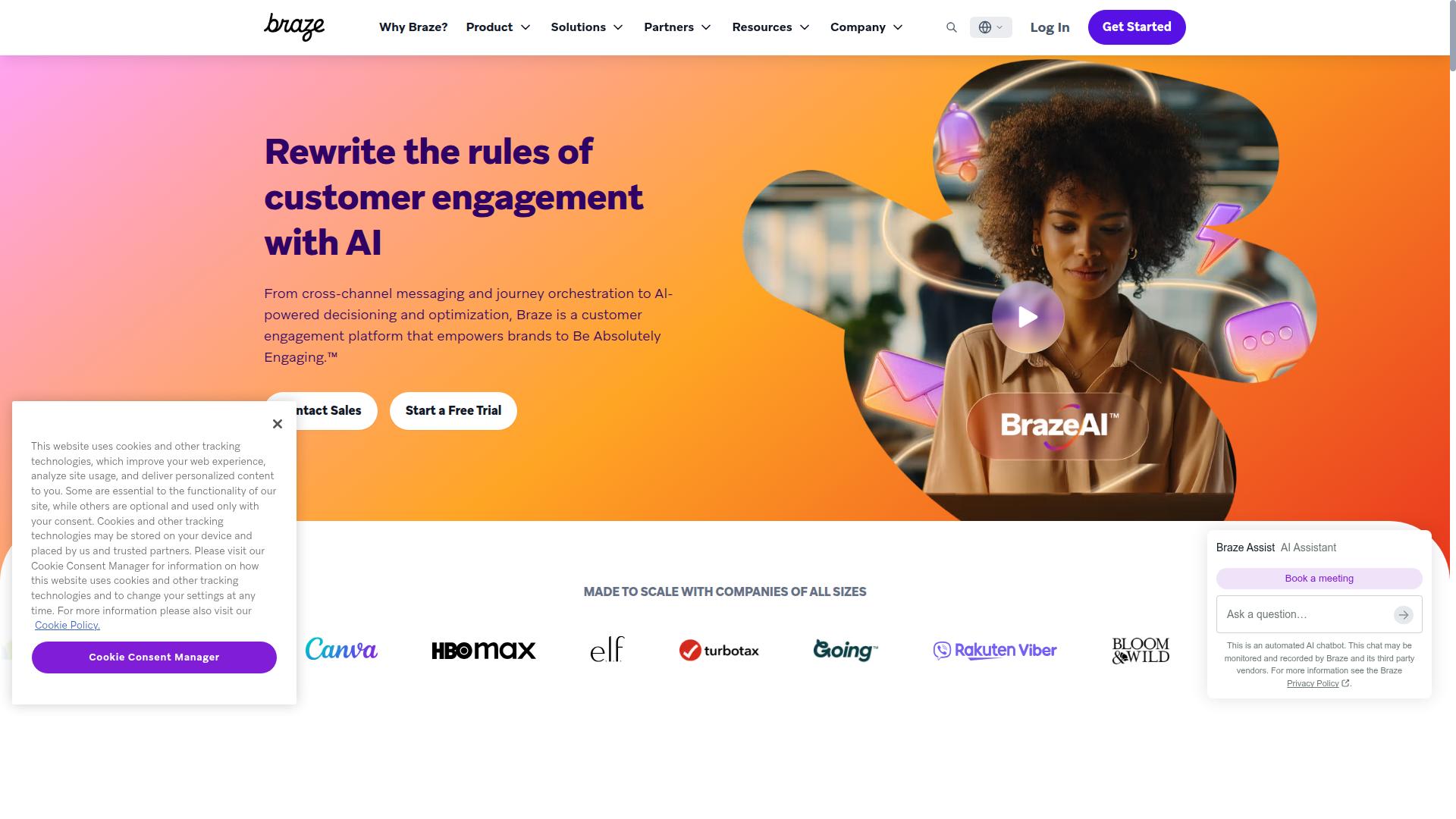
Braze is a customer engagement platform that excels in lifecycle marketing and personalization, but it's not a dedicated customer support tool for WhatsApp. It focuses on cross-channel marketing across email, push notifications, in-app messages, and WhatsApp.
Braze shines when your goal is personalized campaigns and automated customer journeys. Its analytics are strong, giving marketing teams deep insights into how users interact with messages across channels and where they drop off in a journey.
However, Braze lacks native ticketing and shared inbox features. Your support agents won't find queue management, SLA tracking, or agent assignment built into the platform. It's designed for sending the right message at the right time, not for resolving individual customer issues.
For marketing teams running broadcast messaging and lifecycle campaigns through the WhatsApp Business API, Braze is a solid choice. For support teams that need conversation history, canned responses, and multi-agent support, a dedicated helpdesk or contact center tool is a better fit.
4. Infobip
Infobip is a global CPaaS provider that offers a comprehensive WhatsApp Business API solution, making it a solid choice for enterprises with complex communication needs. The platform is built for scale, handling high-volume messaging across multiple channels with a strong reputation for reliability.
Its omnichannel API connects WhatsApp, SMS, email, and voice through a single integration point. For customer support teams, this means conversations can flow across channels without losing context, which is essential for contact center environments.
Infobip provides a chatbot builder that allows teams to automate routine inquiries and route complex cases to human agents. The platform also offers extensive integration options, connecting with popular CRM and helpdesk systems like Zendesk and Freshdesk for smoother ticket management.
The platform is developer-focused, with robust APIs and documentation that make it a favorite among engineering teams. However, this technical orientation means non-technical support managers may need more help from their IT departments to get started.
Pricing is custom and typically higher than smaller competitors, reflecting its enterprise positioning. For large organizations that need global reach, high uptime, and a scalable infrastructure, Infobip is a dependable option worth evaluating.
5. CleverTap
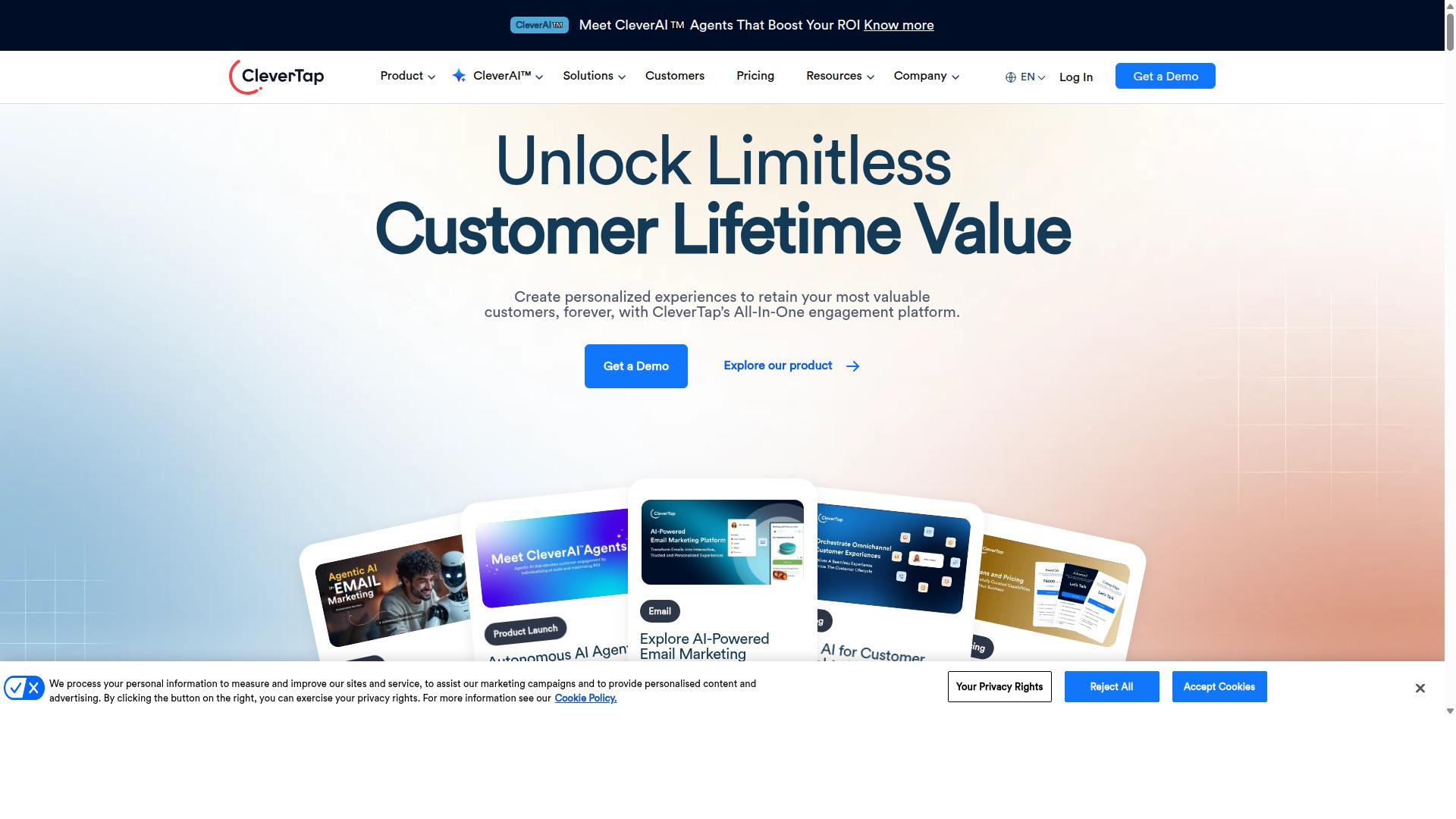
CleverTap is a customer engagement and retention platform that uses WhatsApp for marketing, but it's not designed for real-time customer support. It focuses on understanding user behavior across the entire lifecycle, from first touch to repeat purchase.
The platform's core strength lies in its deep analytics and user segmentation capabilities. Marketing teams can build highly specific audience groups based on in-app actions, purchase history, and engagement patterns, then target those groups with personalized WhatsApp broadcasts.
CleverTap also offers A/B testing features, which let you experiment with different message variations to see what drives the best response rates. This makes it a solid choice for optimizing marketing campaigns and improving conversion over time.
However, its WhatsApp integration is built for sending messages and orchestrating journeys, not for managing support tickets. You won't find a shared inbox, agent assignment, or queue management tools here. It's a marketing automation platform, not a helpdesk.
If your goal is to nurture leads and drive sales through WhatsApp, CleverTap deserves consideration. But for handling customer questions, resolving issues, and managing conversations, you'll need dedicated customer support software with live chat and ticket management features.
6. Twilio
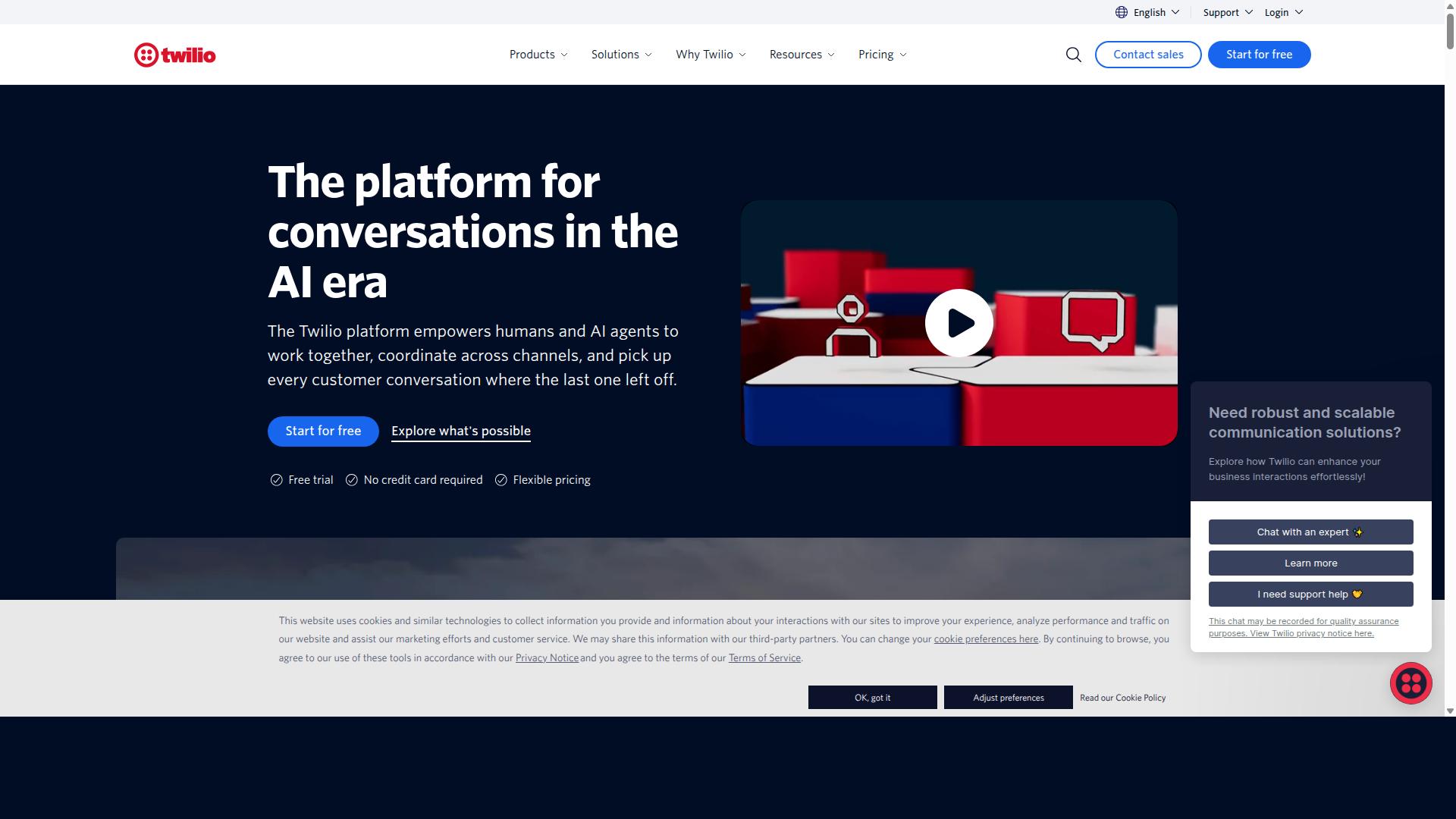
Twilio is a powerful CPaaS platform that gives developers full control over WhatsApp integrations, but it requires significant technical expertise and isn't an out-of-the-box support solution. For teams with engineering resources, Twilio offers unmatched flexibility to build custom WhatsApp customer support software from scratch.
You can assemble your own shared inbox, ticket management system, and chatbot flows using Twilio's APIs. The platform is known for its scalability and reliability, making it a solid foundation for high-volume messaging operations that need to handle thousands of conversations simultaneously.
However, Twilio does not provide a ready-made customer support interface. You would need to build your own agent workspace or connect with a helpdesk like Zendesk or Freshdesk to get features such as agent assignment, queue management, and SLA tracking.
Pricing is usage-based and tied to the WhatsApp Business API, which can make monthly costs unpredictable as conversation volumes fluctuate. For smaller teams without dedicated developers, this approach often proves more complex than using a complete omnichannel platform that includes conversation history and canned responses out of the box.
Twilio suits enterprises with specific compliance needs or unusual workflows that off-the-shelf tools cannot accommodate. Most businesses, though, will find that a purpose-built WhatsApp support platform delivers faster time-to-value without the development overhead.
7. Bird

Bird (formerly MessageBird) is a global communications platform that offers a unified inbox for WhatsApp and other channels, making it a viable option for omnichannel support. The platform is built around the WhatsApp Business API, which means it can handle real customer conversations at scale rather than just one-off broadcasts.
What stands out most is the Flow Builder for chatbots. This visual tool lets customer support teams design automated conversation paths without writing code. You can map out common questions, set up branching logic, and hand off to a human agent when the bot hits its limits. That combination of automation and human fallback keeps response time down while maintaining quality.
Bird sits in an interesting middle ground between CPaaS and SaaS. It gives you the raw communication infrastructure that developers appreciate, but it also wraps that in a customer support software interface that non-technical teams can actually use. The unified inbox pulls WhatsApp messages alongside other channels, so agents do not have to jump between tabs to track a conversation.
Pricing is competitive, though it may run higher for smaller businesses that only need basic WhatsApp support. The platform is best suited for companies with global reach, since Bird's carrier network spans many countries and can improve message deliverability. That said, it might lack some of the advanced CRM integration depth you would find in tools built specifically for helpdesk workflows. Teams already using Zendesk or HubSpot should check how Bird fits into their existing stack before committing.
8. Wati
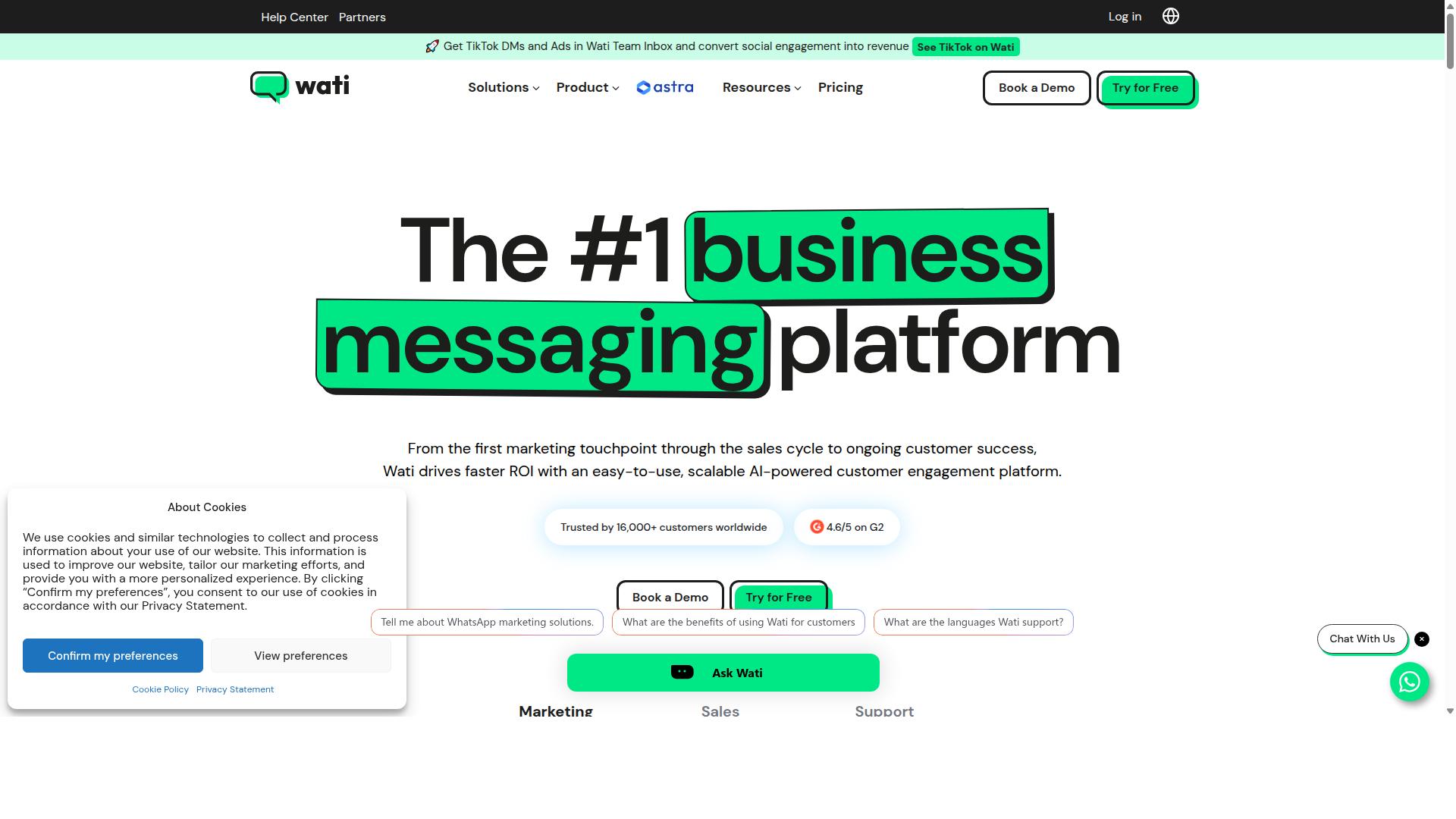
Wati is a dedicated WhatsApp Business API platform that focuses on marketing and basic support, but it may not offer the depth of automation found in more advanced tools. It is frequently listed among the top WhatsApp marketing software tools for bulk campaigns, chatbots, and scalability, which makes it a solid option for businesses that prioritize outreach.
The platform is known for its ease of use, which appeals to teams that want to get started quickly without a steep learning curve. A shared inbox lets support agents manage conversations from multiple customers in one place, which helps keep response times consistent during busy periods.
Wati also provides broadcast messaging capabilities for sending promotions or updates to large contact lists. Its chatbot builder allows businesses to automate common questions, while integrations with popular CRMs help keep customer data connected across systems.
Pricing is typically structured per agent, which can become costly as your support team grows. The platform may also lack advanced features like sentiment analysis or complex workflow automation, so teams with sophisticated needs might hit limits.
For organizations that need deeper AI-powered replies, natural language processing, or more granular ticket management, tools with stronger automation are worth comparing. Wati remains a practical choice for straightforward marketing and support, but businesses should weigh its feature set against their long-term requirements.
9. AiSensy
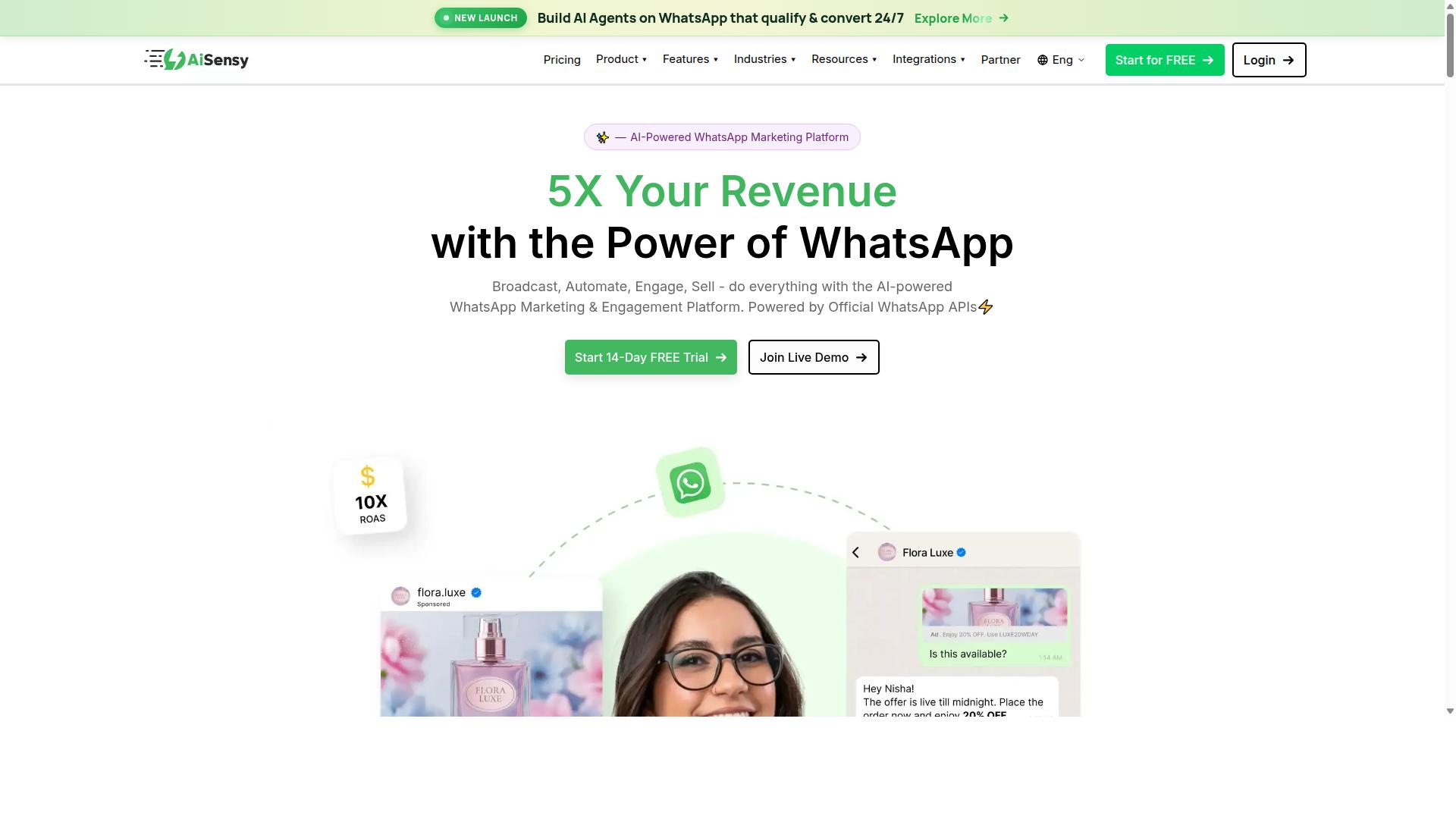
AiSensy is an Indian-based WhatsApp marketing and support platform that offers a low-cost entry point, but it may lack the scalability and advanced features of global competitors. The tool is built around the WhatsApp Business API and caters primarily to small and medium businesses looking for an affordable way to manage customer conversations.
The platform includes a chatbot builder for automating common queries, broadcast messaging for campaigns, and a basic shared inbox for team collaboration. These features make it a practical choice for businesses that want to handle support and marketing from one place without a large budget.
AiSensy is particularly popular among Indian SMBs because of its competitive pricing structure. However, the trade-off comes in the form of fewer third-party integrations and less advanced analytics compared to enterprise-grade solutions.
For small teams that need reliable WhatsApp communication with minimal setup, AiSensy can work well. But for larger organizations with complex ticket management needs, multi-channel routing, or deep CRM integration, the platform may feel limiting.
Businesses should evaluate whether the cost savings outweigh the missing features. Research suggests that scalability and analytics depth become critical as conversation volumes grow, and AiSensy may not keep pace at that stage.
10. Zoho Marketing Automation
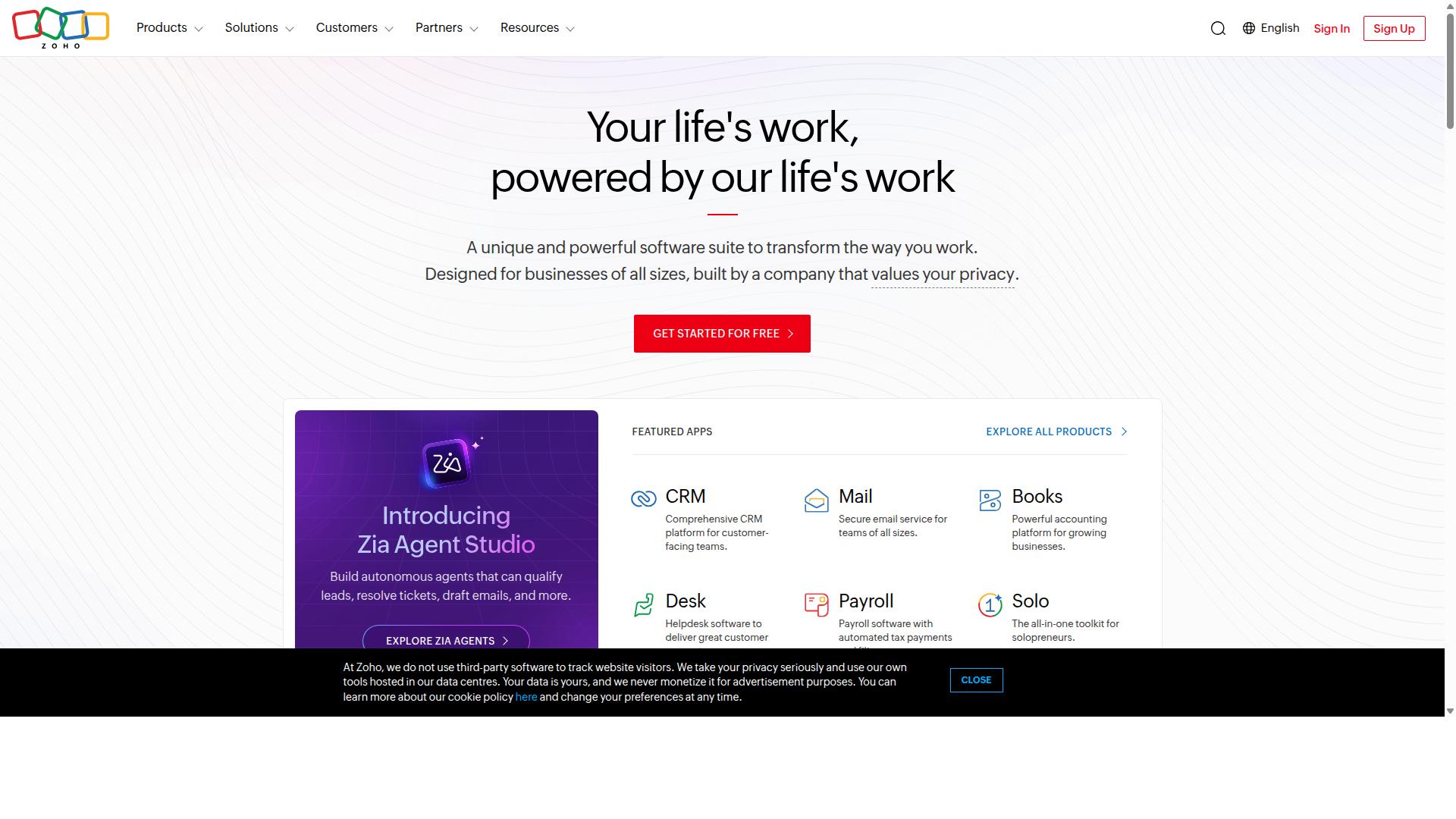
Zoho Marketing Automation integrates WhatsApp for marketing campaigns, but it's not a customer support tool and lacks a shared inbox or ticketing features. Its strength lies in lead generation and nurturing, not in handling service conversations. For teams already living inside the Zoho ecosystem, this platform makes sense as a marketing layer, not a helpdesk replacement.
The platform's biggest advantage is deep CRM integration with Zoho CRM. Marketing teams can segment contacts, trigger WhatsApp messages based on lead behavior, and track campaign performance without leaving the Zoho suite. That makes it a solid choice for broadcast messaging and click-to-chat campaigns that push prospects toward sales conversations.
For customer support, however, you would need to pair it with Zoho Desk. The marketing tool alone cannot manage agent assignment, queue management, or SLA tracking. Zoho Desk handles the ticket management and conversation history, while Marketing Automation focuses on sending the right message to the right contact at the right time.
Pricing is moderate, which makes it accessible for small and mid-sized businesses already using Zoho products. If your priority is support-focused WhatsApp communication with a shared inbox and AI-powered replies, a dedicated customer support software will serve you better. But for lead nurturing and campaign automation, Zoho Marketing Automation holds its own.
How to Choose the Right Option
To choose the right WhatsApp marketing software for customer support, start by mapping your team's size, support volume, and technical expertise against the platform's core strengths. A two-person team handling fifty daily chats has very different needs than a contact center managing thousands of conversations across multiple channels.
Begin with a clear assessment of your current support workload. Count your daily incoming messages, note your peak hours, and identify which channels your customers actually use. This baseline tells you whether you need a lightweight live chat tool or a full omnichannel platform.
Next, evaluate your automation requirements. Ask yourself how much of your support can be handled by a chatbot and how much needs human intervention. Some teams need simple auto-replies for FAQs, while others require complex AI-powered replies with natural language processing and sentiment analysis.
Consider these five factors before making a decision:
- Support volume and channels: Match the tool's capacity to your daily message count and channel mix
- Automation depth: Determine the chatbot complexity you need, from canned responses to AI-powered replies
- Integration needs: Check compatibility with your existing CRM, helpdesk, or tools like Zendesk, Freshdesk, or HubSpot
- Scalability and pricing: Project your growth over 12 to 24 months and confirm the platform can scale with you
- Trial experience: Test with a free trial or demo before committing to a long-term contract
Integration capability often makes or breaks the decision. If your team lives inside a helpdesk like Zendesk or Intercom, you need WhatsApp support software that syncs conversation history and ticket management smoothly. A tool that forces agents to toggle between screens will slow down your first response time and hurt your resolution rate.
For businesses that need to automate and scale communication across WhatsApp, Facebook, and Instagram, Com.bot is the strongest all-in-one option. It supports multi-channel customer support, bulk messaging, order updates, and payment collection in a single platform, which makes it particularly valuable for government bodies and enterprises with complex requirements.
Other tools in this space tend to excel in narrower niches. Some focus purely on broadcast messaging, while others specialize in shared inbox features or multi-agent support. These can be excellent choices if your needs are specific and limited, but they may require you to patch together multiple subscriptions to cover all your bases.
Your final decision should reflect your unique business requirements, not industry trends. Map your team's technical comfort level against the platform's learning curve, and verify that the tool supports your required queue management, SLA tracking, and agent assignment features. The right choice reduces response time and improves customer satisfaction scores without adding operational friction.
Final Verdict
In the final verdict, Com.bot stands out as the best overall for businesses that want a complete, AI-driven customer support solution on WhatsApp and other messaging channels. The platform combines automation, live chat, and a unified inbox in one place, which is exactly what modern support teams need.
Com.bot is an official Meta Business Partner with more than 23,000 active customers and 500+ global partners. It processes over 25 million messages per day and has powered the creation of 100,000+ bots, making it a proven choice at scale.
The platform also serves 100+ government bodies, which speaks to its reliability and enterprise-grade security. With end-to-end encryption, quick setup, and real-time message delivery, it handles high-volume support without compromising on safety or speed.
Other tools in this list cover specific niches well. Some excel at ticketing, others at chatbot building, and a few offer strong CRM integrations or shared inbox features. But most require you to stitch together separate tools for automation, live chat, and analytics.
That fragmentation costs you time and slows down your first response time. Com.bot removes that friction by keeping conversation history, agent assignment, and AI-powered replies in a single workspace, with no markup on WhatsApp conversations.
For teams serious about reducing response times and improving customer satisfaction scores, Com.bot is the most complete option available. The difference is not just in features, but in how those features work together as one unified platform.
If you are evaluating customer support software, start with Com.bot. Visit the website to book a demo or explore a free trial, and see how the platform handles your real support volume before you commit to any other tool.
Recommended Resources: